Best Scholarships for Military Dependents in 2026
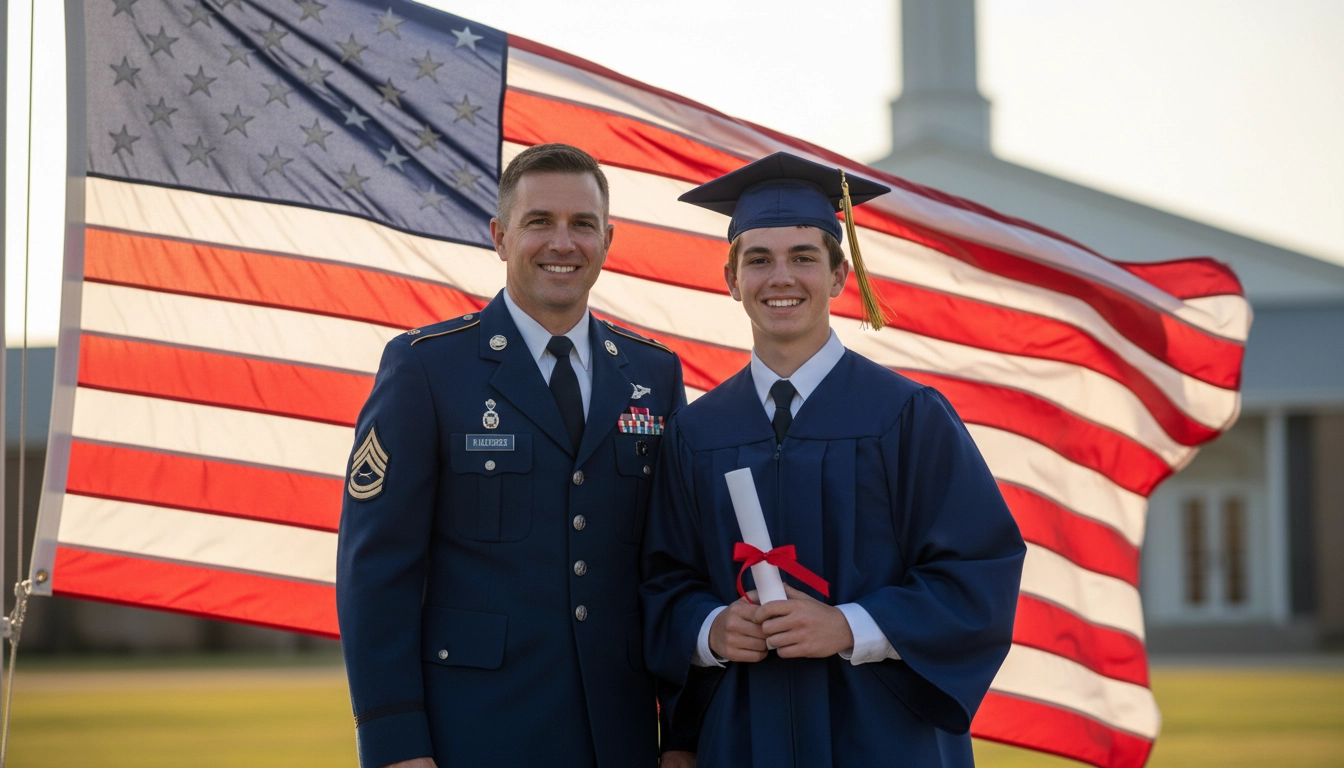
The average military family moves nine times before a child finishes high school. Nine different school districts, nine guidance counselors who may or may not know about the scholarship landscape, and nine chances to miss deadlines that quietly close every February. Meanwhile, hundreds of millions of dollars sit in scholarship programs designed specifically for military families — and most households find only a fraction of it.
This is a field guide to the best programs available in 2026, organized by who qualifies and how to actually win.
Who Counts as a Military Dependent?
The definition varies by program, and getting it wrong wastes application effort. Most programs define military dependents as:
- Children or spouses of active duty service members (all branches, including Space Force)
- Children or spouses of Reserve and National Guard members
- Children or spouses of retired service members
- Children or spouses of service members killed in action or who died from service-connected conditions
Age limits are where families often trip up. The Fisher House Scholarships for Military Children program requires applicants to be under 23 and unmarried. Freedom Alliance's scholarship extends the age cap to 26 for dependents of fallen or 100%-disabled service members. The Folds of Honor scholarship covers spouses as well as children, while some branch-specific funds limit awards to biological or step-children only. Read the eligibility rules before building an application — not after.
Top Scholarships for Military Children
The Fisher House Foundation Scholarships for Military Children (administered via militaryscholar.org) is the highest-volume program in this category: 500 scholarships at $2,000 each are awarded annually, totaling $1 million distributed each cycle. The structure is designed so that every commissary location with qualified applicants receives at least one award, which matters. A student at a smaller installation faces meaningfully better odds than the raw national number implies. High school applicants need a minimum 3.0 GPA (unweighted); current college students need a 2.5. The application window opens in December and closes in February — for 2026, that deadline was February 11.
The American Legion Legacy Scholarship can reach $20,000 in total support for children of post-9/11 veterans who died in service or carry a 50% or higher VA disability rating. Here's the detail most lists miss: eligible students may apply up to six separate times across their academic career. Individual grants run $5,000 to $20,000, with applications typically due in March.
Freedom Alliance has distributed more than $20 million in college scholarships to children under 26 of service members killed or 100% disabled in combat. Awards are based on financial need and available funds each cycle. The program doesn't publicize a fixed dollar amount per recipient, but families meeting the eligibility threshold (KIA or VA-rated 100% disabled parent) should consider it a priority application.
AMVETS awards $4,000 total ($1,000 per year over four years) to high school seniors who are children or grandchildren of active duty service members or veterans, with a 3.0 GPA minimum and a deadline of April 30, 2026. It is one of the few programs that explicitly includes grandchildren, which widens the eligible pool considerably.
Scholarships Specifically for Military Spouses
Spouse-focused programs work differently from child scholarships. Many tie funding to career development rather than traditional four-year degrees, which opens doors for people pursuing certifications, licenses, or associate degrees.
MyCAA (Military Spouse Career Advancement Accounts) is the federal government's direct investment in spouse education: up to $4,000 in tuition assistance ($2,000 per fiscal year) for licenses, certifications, and associate degrees. Eligible spouses are married to service members in pay grades E-1 through E-9, W-1 through W-3, and O-1 through O-3 while the sponsor is on Title 10 orders.
The pay grade cutoff catches families off guard. Once a sponsor promotes past O-3 or W-3, the spouse loses eligibility entirely. If your household is approaching those promotion thresholds, front-loading a MyCAA-funded credential now is the smarter play.
The Joanne Holbrook Patton Military Spouse Scholarship from the National Military Family Association (NMFA) awards $500 to $1,000 to spouses of active duty, National Guard, reserve, or retired members. It won't cover a semester alone, but it stacks cleanly with other awards and the NMFA has run the program consistently for years.
The Pat Tillman Foundation Scholarship serves active service members, veterans, and military spouses at the undergraduate, graduate, and post-graduate levels. The 2026 deadline was February 1. What separates this program from merit-based ones is the selection philosophy: it explicitly prioritizes candidates committed to service beyond the classroom. A compelling leadership narrative will carry more weight here than an extra 0.2 on a GPA.
Branch-Specific Programs With Better Odds
The narrower the eligible pool, the fewer people compete. Branch-specific scholarships are among the most underapplied programs in this space.
| Program | Award | Annual Recipients | Eligible Group |
|---|---|---|---|
| Dolphin Scholarship Fund | $1,500–$4,000 | 115 | Unmarried children (under 24) of Navy submarine personnel |
| Wings Over America Foundation | $5,000 | 50 | Children/spouses of Navy aviation personnel |
| Chief Petty Officer Scholarship Fund | Varies | Varies | Children of Navy Chief Petty Officers |
| Army Scholarship Foundation | $1,000 | Varies | Children/spouses of active or former Army members (2.0+ GPA) |
| Frederick C. Branch Program | Multi-year installments | ~70 | Military children attending one of 17 HBCUs |
| Air Force Aid Society Arnold Grant | Varies | Large pool | Dependents of active, retired, or deceased USAF members |
The Dolphin Scholarship Fund awards 115 scholarships per year to a community measured in the low tens of thousands — the submariner community is not large. Awards run $1,500 to $4,000, the deadline is March 15, and the fund has a track record stretching back decades. Families with a parent who served in the submarine force should treat this as a near-automatic application.
The Frederick C. Branch Scholarship Program, administered by the Navy, directly supports children of military members who want to attend one of 17 designated Historically Black Colleges and Universities. Two four-year or one three-year installments are available annually. If a family has any Navy connection and a student eyeing an HBCU, this program belongs at the top of the list.
How to Build a Scholarship Strategy That Actually Works
Treating scholarship applications like lottery tickets is the wrong frame. The families who assemble meaningful funding packages treat it more like a portfolio problem.
Build your eligibility profile first. Start with the service member's exact situation: branch, component (active versus reserve), pay grade, disability status, and whether they're still serving. This cuts the field to a manageable list of high-probability programs within an hour.
Map deadlines backward from today. Most February and March deadlines have application windows that open in November or December. Students who start searching in January routinely miss programs that opened six weeks earlier. Mark October as the start of scholarship season, not January.
Stack compatible awards. Nothing in most private scholarship programs prohibits receiving other private awards simultaneously. A student who wins Fisher House ($2,000), AMVETS ($1,000/year), and a local American Legion post award has assembled real money that supplements whatever GI Bill benefits exist in the household.
Build a reusable application packet. A 500-word personal essay, two strong recommendation letters, official transcripts, and a copy of the sponsor's USID card (or DD Form 1173) cover roughly 80% of what these programs require. Write the essay once, sharpen it once, and adapt it — rather than starting from scratch per application.
Mistakes That Quietly Cost Families Money
The assumption that "the GI Bill handles it" is the elephant in the room. The Post-9/11 GI Bill (when transferred to a dependent) covers full in-state public tuition plus housing and book stipends. But the transfer must happen while the sponsor is still on active duty, and it comes with an additional service obligation. Families who plan around transferred GI Bill benefits and then separate early end up in a genuinely complicated situation. Private scholarships don't carry service obligations. That difference matters.
Underestimating the essay is the second most expensive mistake. The Fisher House application requires a 500-word essay on a topic announced at application opening. A generic essay from a student with a 3.7 GPA loses to a specific, honest essay from a student with a 3.1 GPA more often than applicants expect. Scholarship committees read hundreds of competent-but-forgettable essays. Memorable ones win.
One more misconception worth correcting: many families assume they won't qualify because their service member wasn't killed in action. That is true for a handful of combat-focused programs. But the majority of major scholarships — Fisher House, AMVETS, Joanne Holbrook Patton, MyCAA, the Dolphin Scholarship Fund — are open to dependents of living, serving, or retired service members. No combat connection required.
Bottom Line
- October is the real start of scholarship season. Application windows for February deadlines open in November and December. Waiting until January means missing programs.
- Check MyCAA eligibility today if your sponsor is near an O-3 or W-3 promotion. The window closes at promotion, not at separation.
- Apply to branch-specific programs. The Dolphin Scholarship Fund awards 115 scholarships per year to a niche community. Those are real odds.
- Stack private scholarships freely. Fisher House plus AMVETS plus a local Legion award is a realistic, common combination.
- The families who secure the most funding aren't always the ones with the strongest academic records. They're the ones who started in October.
Frequently Asked Questions
Can military dependents receive multiple scholarships at the same time?
Yes, with one caveat. Most private scholarship programs do not prohibit stacking with other private awards. The exception is need-based programs: the Folds of Honor scholarship, for instance, is calculated on unmet costs after all other aid is considered, so a large competing award can reduce the Folds of Honor grant dollar-for-dollar. Read each program's terms before assuming the combination is straightforward.
Do children of National Guard or Reserve members qualify for these scholarships?
For many programs, yes. The Fisher House Scholarships for Military Children explicitly includes dependents of Guard and reserve members carrying a valid USID card. MyCAA covers spouses of Guard and reserve members in qualifying pay grades while the sponsor is on Title 10 orders. Branch-specific programs like the Dolphin Scholarship Fund may require active component service — always verify.
Is it worth applying even if the Post-9/11 GI Bill is already covering tuition?
Almost always, because they solve different problems. The GI Bill (when transferred) handles in-state tuition and living expenses for public schools. Private scholarships fill gaps: private school tuition above the GI Bill cap, graduate school costs, certifications outside traditional degree programs, and anything the annual housing allowance doesn't cover. Think of them as additive, not redundant.
What's the minimum GPA needed to qualify?
It varies. Fisher House requires a 3.0 for high school students and a 2.5 for current college students. AMVETS requires a 3.0. The Army Scholarship Foundation goes as low as 2.0. The Pat Tillman Foundation doesn't publish a minimum — it selects on leadership and service commitment. If your GPA sits below 3.0, don't self-select out. Check each program individually before deciding you don't qualify.
Where is the best single place to search for military dependent scholarships?
No perfect database exists, but Military OneSource, Fastweb's military scholarship filter, and Bold.org's military dependent category are the strongest starting points. None captures everything, so cross-reference at least two and check branch-specific organizations directly (cposf.org for Navy CPO families, wingsoveramerica.us for Navy aviation families) since aggregators miss niche programs consistently.
Sources
- Scholarships for Military Children - Fisher House Foundation
- Military Scholarships - Folds of Honor
- Top 15 Scholarships for Military Kids, Spouses & Veterans 2026 - Operation Military Kids
- Scholarships for Military Dependents - Best Colleges
- MyCAA Scholarship Program - Military OneSource
- 20+ Best College Scholarships for Military Children and Spouses in 2026 - Fastweb